SaaS vs custom built loyalty solutions: pros and cons


SaaS vs Custom Built Loyalty Solutions: Pros and Cons
Loyalty programs have become a major growth lever for brands that want repeat purchases, higher retention, and stronger customer relationships. Businesses can choose between two approaches when building loyalty systems. They can use a SaaS based loyalty platform or invest in a custom built solution. Each option has its own strengths, limitations, and operational requirements. Understanding these differences helps companies make better decisions that match their technical resources, budget, and long term engagement goals.
As loyalty initiatives mature, teams often begin evaluating loyalty software alternatives to understand whether an off-the-shelf product or a custom architecture will better support future scale.
What a SaaS Loyalty Platform Offers
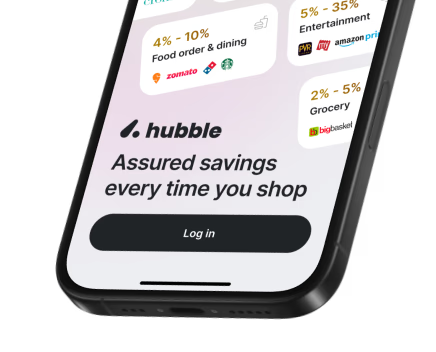
A SaaS loyalty platform is a ready to use system provided by a third party. It typically includes modules for rewards, catalog management, analytics, fulfilment, and user engagement. These platforms require minimal setup and allow brands to launch their loyalty programs quickly. One example is the Hubble Loyalty Portal, which offers a structured and scalable toolkit for creating reward experiences.
For many teams, SaaS based loyalty program software reduces time to market by offering pre configured tools for common loyalty use cases without the need for deep engineering investment.
- Fast deployment
- No heavy engineering work
- Lower upfront cost
- Pre built features for rules, catalog, and analytics
- Regular updates and maintenance handled by the provider
SaaS platforms are suitable for companies looking for simplicity, speed, and predictable pricing.
Advantages of Custom Built Loyalty Systems
A custom built system is developed from scratch by the brand or through an external tech partner. This gives full control over every component, from reward rules to backend logic.
This approach is often chosen when businesses want to tightly integrate loyalty logic with internal systems such as payments, CRM, or data platforms, rather than relying on a standalone digital rewards platform.
- Total ownership of the architecture
- Ability to design unique mechanics
- Custom user journeys and dashboards
- Integration flexibility with existing internal systems
- Long term independence from external vendors
Brands choose this path when they have niche requirements or need a loyalty framework deeply tied to their internal workflows.
Comparing Both Models
1. Deployment Time
- SaaS: Launches within days or weeks
- Custom built: Requires months of development
2. Cost Structure
- SaaS: Subscription model with predictable pricing
- Custom built: Higher upfront development cost
3. Flexibility
- SaaS: Fixed structure with configurable options
- Custom built: Fully flexible but resource intensive
4. Maintenance and Scaling
- SaaS: Maintenance handled by provider
- Custom built: Internal team must manage updates
5. Integrations
- SaaS: Plug and play APIs for rewards, rules, and tracking
- Custom built: Requires technical work for every integration
Pros and Cons Summary
SaaS Loyalty Solutions
- Pros: Quick launch, lower cost, minimal engineering, structured tools
- Cons: Less flexibility compared to custom builds
Custom Built Solutions
- Pros: Full control, deeply customised features, tailored workflows
- Cons: High effort, longer timelines, continuous maintenance
Which Option Should Businesses Choose
Companies with limited engineering bandwidth or a need to launch quickly often prefer SaaS solutions. Companies with limited engineering bandwidth or a need to launch quickly often prefer SaaS solutions. Modern customer loyalty software platforms offer ready modules for reward catalogues, rules engines, fulfilment, and analytics, making them easier to operate at early and mid stages. Meanwhile, brands with specialised loyalty mechanics or in house technical teams may opt for a custom architecture. The final choice depends on speed, budget, long term adaptability, and the scale at which the loyalty program will operate.
Short summary