Loyalty integration patterns for mobile apps


Why loyalty integration is an architectural concern
In mobile apps, loyalty is often treated as a growth or marketing feature. At enterprise scale, it becomes an architectural concern. Loyalty systems touch transactions, user identity, payments, analytics, and external partners. How loyalty integrates with a mobile app directly affects reliability, scalability, and long-term flexibility, especially when the app depends on a shared mobile loyalty platform across multiple journeys and channels.
Poor integration decisions usually surface later as latency issues, fragile dependencies, and limited ability to evolve reward logic. For enterprise teams, loyalty integration is less about rewards themselves and more about how incentive logic fits into the broader system landscape.
Understanding common integration patterns helps teams make decisions that align with scale, governance, and future roadmap needs.
Core loyalty integration patterns in mobile apps
Direct in-app logic integration
In this pattern, loyalty logic is implemented directly within the mobile app backend. Reward eligibility, accrual, and redemption rules are handled internally with minimal external dependencies.
This approach offers tight control and predictable latency. However, it increases complexity within the app stack. Changes to loyalty logic require backend releases, and experimentation slows as logic becomes tightly coupled to core product flows.
Direct integration works best when loyalty requirements are simple and unlikely to change frequently.
API-driven external loyalty services
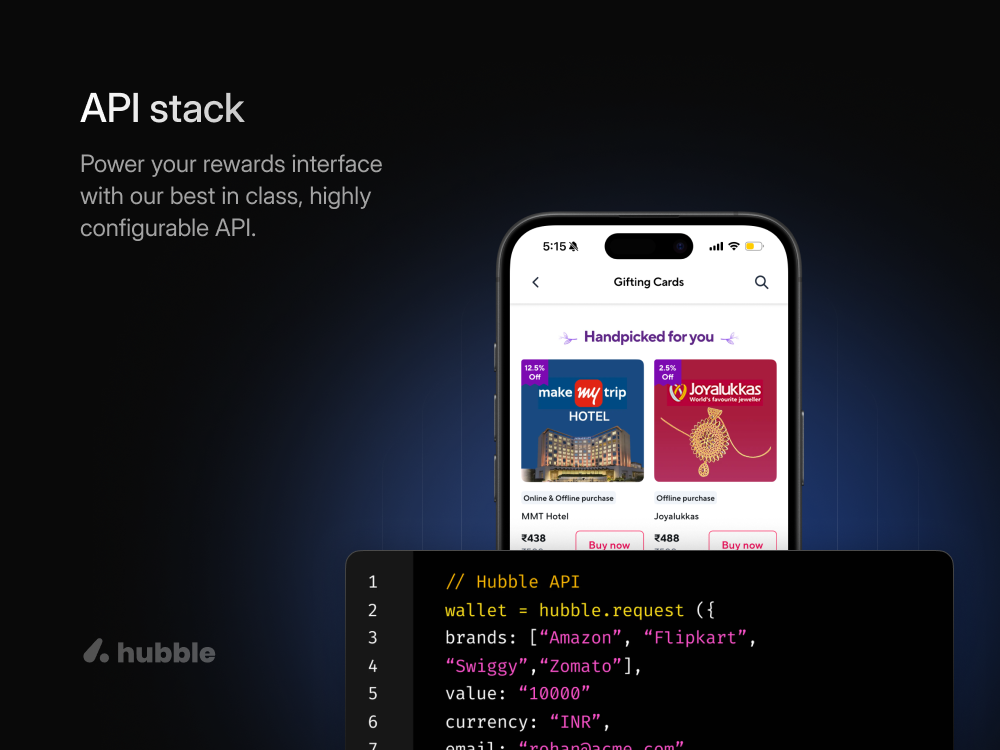
Here, the mobile app or backend communicates with an external loyalty or rewards platform via APIs. The app sends events, and the external system evaluates rules and executes rewards.
This pattern reduces internal complexity and accelerates time to launch. Operational concerns such as catalog management, fulfillment, and reconciliation are handled externally.
The trade-off is dependency. API reliability, latency, and vendor constraints directly impact app experience. At enterprise scale, these systems must be treated as critical infrastructure rather than optional integrations.
Event-driven loyalty integration
Event-driven integration decouples the mobile app from loyalty execution. User actions generate events that are processed asynchronously by loyalty services.
This pattern improves resilience and scalability. The app does not wait for reward execution, reducing user-facing latency. Failures can be retried without blocking core flows.
Event-driven models are common in enterprise architectures where loyalty is one of several downstream consumers of user activity data.
Synchronous versus asynchronous reward processing
Synchronous reward evaluation
Synchronous integration evaluates rewards in real time during the user action. This provides immediate feedback, which is valuable in payment or checkout flows.
However, synchronous dependencies increase failure risk. If the loyalty system slows down or fails, core app journeys may be impacted. This model requires strict latency budgets and fallback logic.
Asynchronous reward processing
Asynchronous models prioritise system stability. Rewards are processed after the user action completes.
This reduces coupling and improves fault tolerance but requires clear user communication, as rewards may appear later. Enterprises often reserve synchronous logic for critical moments and use asynchronous processing for most loyalty actions.
Data ownership and system boundaries
Placement of reward logic
A key architectural decision is where reward rules live. Centralising logic in an external system simplifies updates but reduces internal visibility and control.
Keeping rules internal increases ownership but adds maintenance overhead. Many enterprises adopt a hybrid approach, keeping eligibility logic internal while outsourcing fulfillment and catalogs.
Identity consistency
Loyalty systems depend on stable user identity across devices and channels. Inconsistent identifiers lead to duplicated rewards and reconciliation issues.
Enterprise architectures typically rely on central identity services rather than app-specific identifiers to ensure consistency.
Operational and governance considerations
Environment parity and testing
Loyalty integrations must support sandbox and staging environments that mirror production. Testing reward logic directly in production increases risk and complicates rollback.
Clear versioning, audit trails, and deployment controls signal architectural maturity.
Observability and failure handling
Enterprises require visibility into event flow, reward issuance, and failures. Without observability, loyalty issues become difficult to diagnose and resolve.
Rate limiting, retries, and idempotency are essential patterns, especially during campaigns and traffic spikes.
Aligning integration patterns with enterprise goals
Multi-product and multi-channel support
Enterprises rarely operate a single app. Loyalty integration should support reuse across mobile, web, and partner channels.
Tightly coupled integrations limit reuse and increase duplication across teams.
Designing for long-term flexibility
Loyalty requirements evolve as products, partners, and regulations change. Integration patterns should allow logic and vendors to change without major app rewrites.
Architectures that separate intent, execution, and fulfillment provide the most flexibility over time.
Why integration choices shape loyalty outcomes
Loyalty integration patterns influence reliability, experimentation speed, and operational resilience. For enterprise architecture conversations, the focus should be on how loyalty fits into the overall system design.
Mobile apps that treat loyalty as infrastructure rather than a feature are better positioned to scale, adapt, and maintain user trust as complexity increases.
Short summary