How to measure ROI of loyalty programs


How to Measure ROI of Loyalty Programs
Loyalty programmes are designed to strengthen customer relationships, increase repeat behaviour, and improve overall business performance. To understand whether these programmes truly work, brands need to measure ROI in a structured way. ROI is not only about financial return but also about long term engagement, improved user habits, and operational efficiencies. When measured correctly, it provides a clear picture of how effective the loyalty programme is.
Why Measuring ROI Is Essential
Many companies run loyalty initiatives without tracking their impact. This leads to unclear budgets, mismatched expectations, and poorly optimised reward structures. Measuring ROI helps teams make better decisions and maintain consistent value.
- Shows which rewards drive the best response
- Helps identify cost effective improvements
- Builds a clear case for continued investment
- Highlights user segments delivering long term value
With proper measurement, loyalty becomes a strategic tool rather than a standalone feature.
Key Metrics to Track
ROI becomes easier to understand when broken into measurable components. These metrics reveal how users interact with the programme and how it contributes to business outcomes.
1. Retention Rate
- Percentage of users who stay active over time
- Shows whether loyalty efforts reduce churn
2. Repeat Purchase Rate
- Measures how often customers buy again
- Important for ecommerce, travel, and subscription products
3. Redemption Rate
- Percentage of rewards that users actually redeem
- Higher redemption often indicates strong engagement
4. Customer Lifetime Value
- Tracks revenue generated by a customer over their entire journey
- Shows long term impact of reward driven behaviour
5. Cost to Reward Ratio
- Compares reward spend with the value generated
- Helps maintain efficient budgets
These metrics together provide a complete view of performance.
Analysing Behaviour for Deeper Insights
To measure ROI effectively, brands need to observe how users behave before and after joining the loyalty programme. Behaviour trends help understand whether loyalty incentives are leading to meaningful outcomes.
- Changes in session time or order frequency
- Movement between user segments or tiers
- Increased usage of specific product features
- Engagement with promotions or reward catalogues
These patterns show which parts of the loyalty programme drive real value.
Importance of a Strong Loyalty Infrastructure
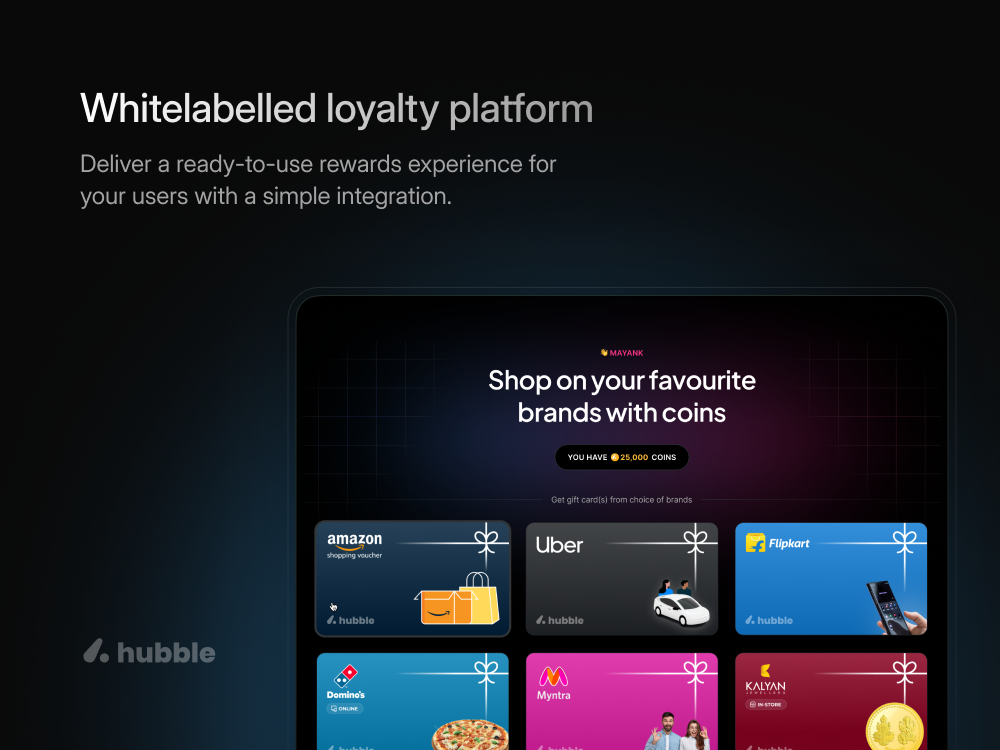
To measure ROI accurately, brands need a system that records user activity, reward triggers, costs, and redemption patterns in real time. Platforms like the Hubble Loyalty Portal provide dashboards, segmentation tools, and automated reward workflows that make tracking simpler.
- Real time logs of user behaviour
- Automated reward mechanisms
- Clear insights into segment performance
- Unified view of reward cost and redemption impact
Having the right system ensures that teams can measure outcomes without manual effort.
Calculating ROI in a Simple Way
A straightforward way to calculate ROI is to compare the value created by the loyalty programme with the total cost of running it.
- Value generated: Revenue uplift, increased retention, and repeat actions
- Programme costs: Rewards, platform charges, and operational expenses
When value consistently exceeds cost, the loyalty programme is delivering strong ROI.
Building Continuous Improvement
The strongest loyalty programmes evolve based on performance insights. Monitoring ROI helps teams refine rules, adjust reward types, optimise segments, and update communication flows. This keeps the programme relevant and aligned with business goals.
Why ROI Measurement Strengthens Loyalty Strategy
A well measured loyalty programme becomes predictable, cost effective, and strategically valuable. It helps brands grow lifetime value, strengthen customer habits, and design experiences that keep users engaged. With accurate insights, loyalty transforms from a cost centre into a powerful growth engine.
Short summary