How Modern Loyalty Infrastructure Is Built: APIs, Rules, Fulfillment, Security & Scale


Why loyalty infrastructure is a systems problem
Modern loyalty systems are no longer simple points engines. They operate across real-time user actions, transactions, partner catalogs, compliance boundaries, and analytics pipelines. At scale, loyalty becomes a distributed system that must balance speed, reliability, cost control, and abuse prevention.
Teams that treat loyalty as a feature often struggle as volume grows. Latency increases, reward inconsistencies appear, and operational overhead expands. Modern loyalty infrastructure is built by separating concerns and designing for scale from the start.
API-first foundations
Event ingestion and issuance APIs
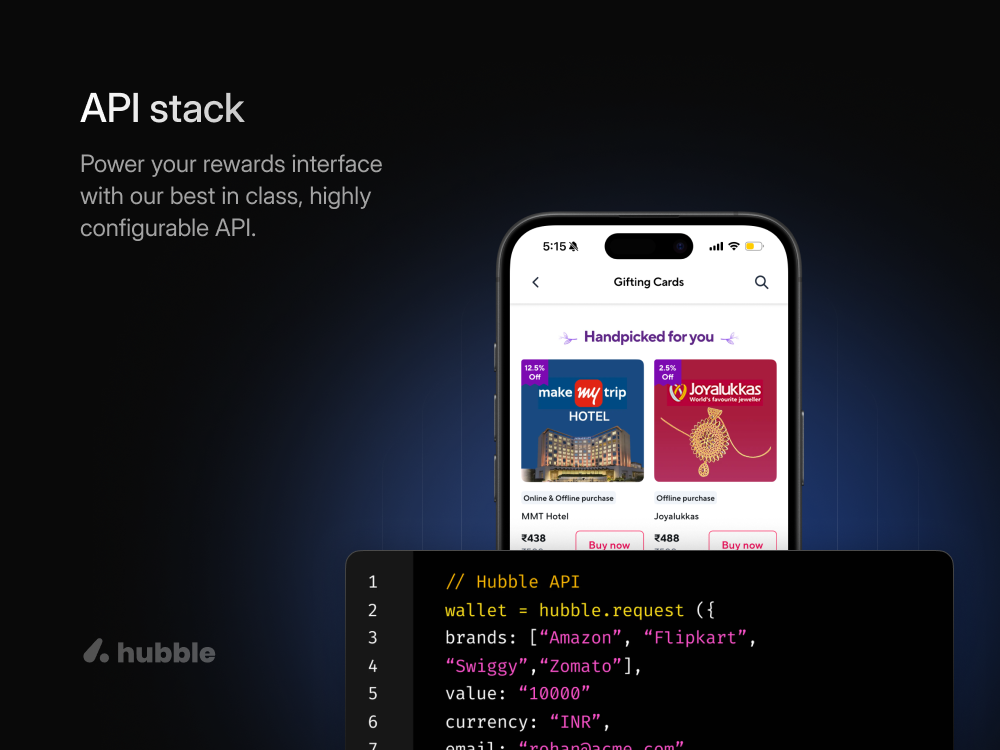
At the core of modern loyalty systems is an API layer. APIs handle event ingestion, reward issuance, validation, and status tracking. User actions such as transactions, referrals, or repayments are translated into structured events.
Well-designed APIs are idempotent, versioned, and explicit about failure states. This prevents duplicate rewards and allows safe retries during traffic spikes or partial outages.
Separation of intent and execution
APIs capture intent, not outcome. An API call records that an eligible action occurred, while downstream systems decide how and when rewards are fulfilled. This separation improves reliability and allows systems to evolve without breaking clients.
Rule engines and eligibility logic
Configurable rule evaluation
Rule engines determine whether an event qualifies for a reward. Modern systems avoid hard-coded logic and instead use configurable rules based on user attributes, transaction values, time windows, and historical behavior.
Rules are evaluated under strict latency budgets. Caching, pre-compilation, and short-circuit evaluation are common techniques to keep response times predictable at scale.
Guardrails against abuse
Rule engines also act as control layers. Velocity limits, usage caps, and exclusion logic prevent reward gaming and leakage. These controls must operate in real time to be effective.
Fulfillment and reward execution
Asynchronous fulfillment pipelines
Reward fulfillment is rarely processed inline. Once eligibility is confirmed, fulfillment requests are queued and handled asynchronously. This isolates third-party dependencies such as gift card providers or wallet systems.
Queued fulfillment allows batching, retries, and backoff strategies without blocking user-facing flows.
Idempotency and reconciliation
At scale, duplicate events are unavoidable. Fulfillment systems rely on idempotent operations to ensure rewards are issued once and only once.
Reconciliation processes compare issued rewards, delivered rewards, and redeemed rewards to maintain financial accuracy and auditability.
Security and compliance layers
Data protection and access control
Loyalty systems process sensitive user and transaction data. Encryption at rest and in transit is mandatory. Access controls must be granular, separating operational, financial, and administrative roles.
Audit logs track rule changes, reward issuance, and manual interventions to support internal reviews and external audits.
Fraud detection mechanisms
Modern infrastructure includes built-in fraud controls such as anomaly detection, rate limits, and rule-based blocking. These systems monitor abnormal redemption patterns and respond automatically.
External fraud tools can complement internal controls, but core protections must be embedded in the platform.
Scaling for volume and reliability
Event-driven architectures
High-scale loyalty platforms rely on event-driven processing. Events are published once and consumed by multiple services such as rule evaluation, analytics, and notifications.
This decoupling allows independent scaling and prevents cascading failures.
Stateless services and horizontal scaling
Stateless services enable horizontal scaling during peak campaigns. State is stored in shared data layers or streams, allowing compute capacity to expand or contract without coordination overhead.
Observability and alerting
Scaling systems require visibility. Metrics, logs, and traces track latency, error rates, queue depth, and reward anomalies. Alerting thresholds are tuned to detect issues before users are impacted.
Analytics and reporting infrastructure
Operational versus analytical data stores
Transactional databases are optimized for correctness, not analytics. Modern loyalty systems stream event data into analytical stores designed for aggregation and reporting.
This separation prevents reporting queries from degrading live reward processing.
Cost and performance visibility
Teams need real-time insight into reward costs, breakage, and campaign performance. Clear separation of platform fees and reward value enables accurate ROI analysis.
Why modern loyalty infrastructure is built this way
Scalable loyalty systems are the result of early architectural decisions, not reactive fixes. APIs, rule engines, fulfillment pipelines, security layers, and observability work together to create predictable behavior under load.
Teams that invest in modular, event-driven loyalty infrastructure gain flexibility, reliability, and control as programs grow. Those that do not face increasing operational risk, incentive leakage, and system fragility.
Modern loyalty infrastructure is built as core platform infrastructure, not as an add-on. That distinction determines whether loyalty systems scale smoothly or become bottlenecks as usage increases.
Short summary